A new plan to boost employment and tackle economic inactivity.
Compared to the UK average of 75.4%, the working-age employment rate in Wales currently sits at 73.4%, confirming a persistent performance lag against other nations that requires targeted intervention.
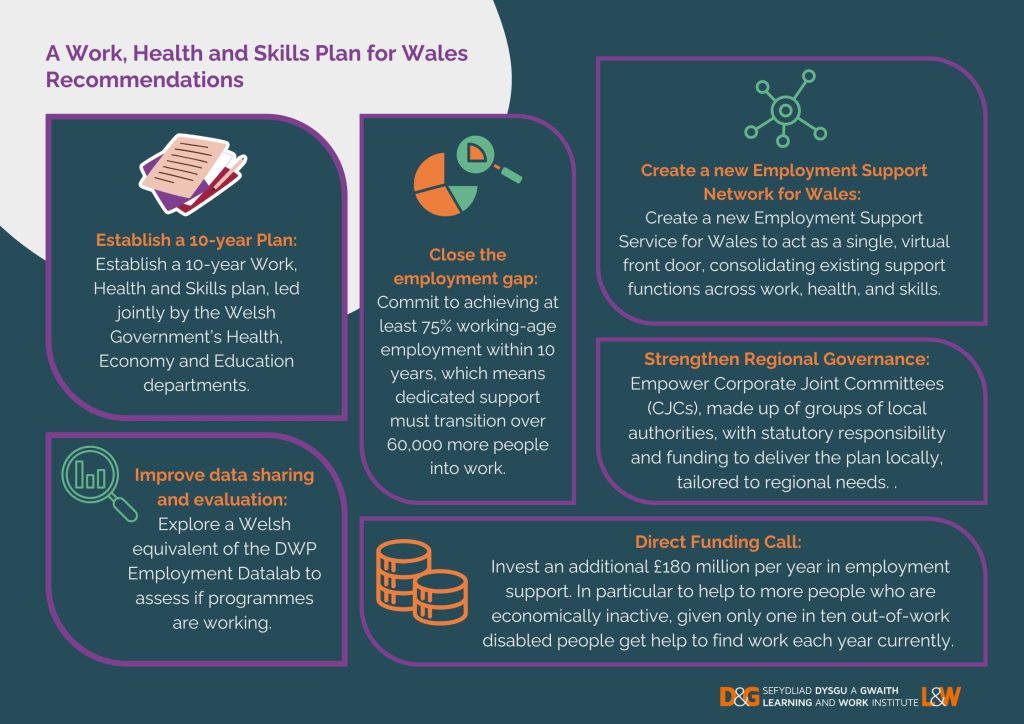
To address this persistent gap and reduce employment inequality, Wales must set a bold ambition to achieve at least three quarters of working-age adults in work within the next 10 years. Achieving this target requires increasing employment in Wales by at least 60,000 people, through dedicated action, focused on supporting those who face the greatest barriers, to help more people into work and support them to stay in work.
What does this mean for Wales?
This research delivered by Learning and Work Institute, and funded by Serco, comes at a pivotal moment to inform a significant new era for employment support in Wales. The commitment from the UK Government to devolve non-Jobcentre Plus support is part of a broader strategy, outlined in the recently released Get Britain Working White Paper, which aims to streamline and enhance employment support mechanisms across the UK.
This strategic shift will give Wales more control over the design and delivery of highly tailored, impactful employment policies that leverage local insights and align with the goals of reducing economic inactivity across the country.
The Welsh Government holds substantial responsibility for designing a focused Work, Health and Skills Plan. With approximately £288 million allocated to employment support (2024–2025), and a potential additional £47 million per year from devolution (based on L&W’s analysis), a crucial opportunity exists to align these significant resources and reduce economic inactivity.
This project presents timely analysis to create a richer understanding of the groups most impacted by labour market inequalities – namely women, disabled people/those with long-term health conditions, and ethnic minority groups – and to develop clear, implementable policy recommendations for a more inclusive Welsh labour market.
Economic inactivity in Wales
Key findings
Analysis of 2021 Census and Annual Population Survey data highlights significant, intersecting labour market challenges across Wales:
- Higher rates: Wales experiences higher rates of economic inactivity (15.8%) compared to England (14.2%). The primary driver of this disparity is disability and poor health, accounting for 6.9% of the working-age population’s inactivity.
- Gender gap: Women are significantly more likely to be economically inactive than men (at a rate of 18.8% compared with 12.7%), largely driven by women taking on more responsibility for looking after home and family.
- Ethnic minorities: Economic inactivity is more likely to affect those from ethnic minority groups (18.0%) compared to those from White backgrounds (15.7%).
- Regional disparities: Employment outcomes vary regionally. Mid Wales shows the biggest employment gaps for disabled people, and one in eight working-age people in Blaenau Gwent are receiving Universal Credit health, double the proportion in Gwynedd.
Summary of recommendations
To deliver on the national employment target, L&W suggests that the Welsh Government develop a robust labour market policy centred on work, health, and skills. Key recommendations for decisive action include: