By Rachel Terman, Associate Professor of Sociology and Director of Graduate Studies, Ohio University.
In honour of Adult Learners’ Week in Wales, I’m reflecting on my connection with the DOVE Workshop, a powerful experience that transformed my understanding of community education.
This past May, Dr. Tiffany Arnold and I brought a group of eight Ohio University students to Wales to spend ten days learning about the country and focusing specifically on the comparisons between Appalachian and Welsh post-coal communities. This programme was inspired, in part, by the decades-long exchange between Appalachian and Welsh scholars, miners, and community activists, which was documented in the 2016 film After Coal: Welsh and Appalachian Mining Communities, directed by Tom Hansell, and his subsequent 2018 book After Coal: Stories of Survival in Appalachia and Wales.
I, myself, had taken part in this exchange 18 years ago as a graduate student studying with Patricia Beaver and Billy Schumann at Appalachian State University in Boone, North Carolina. During that visit to Wales, we students spent about a month living in a scout hut in Ystradgynlais, learning about mining and community history in the Welsh coal valleys and spending days working with community organisations in the area.
I had the great fortune to spend most of my time with the DOVE Workshop, learning about their adult and community education efforts. My experience with DOVE left a lasting impact as I went on to earn my PhD in Rural Sociology and Women’s Studies at the Pennsylvania State University after earning my MA in Appalachian Studies at Appalachia State.”
Community Learning
When I joined the faculty as an assistant professor at Ohio University in 2015, I was again fortunate to be able to work with and collaborate with Tiffany Arnold whose background was in Curriculum and Instruction and the impact of rural places in Appalachia on the experiences of first-generation college students. We are both keenly interested in fostering connections between college students and local community organisations and building knowledge. In 2018, we began working together with the Appalachian Collegiate Research Initiative, a programme sponsored by the U.S. government’s Appalachian Regional Commission, which supports applied research training for Appalachian college students working toward economic development initiatives in their communities. Through this programme, we are able to promote learning outside of the classroom and expose students to local knowledge and expertise.
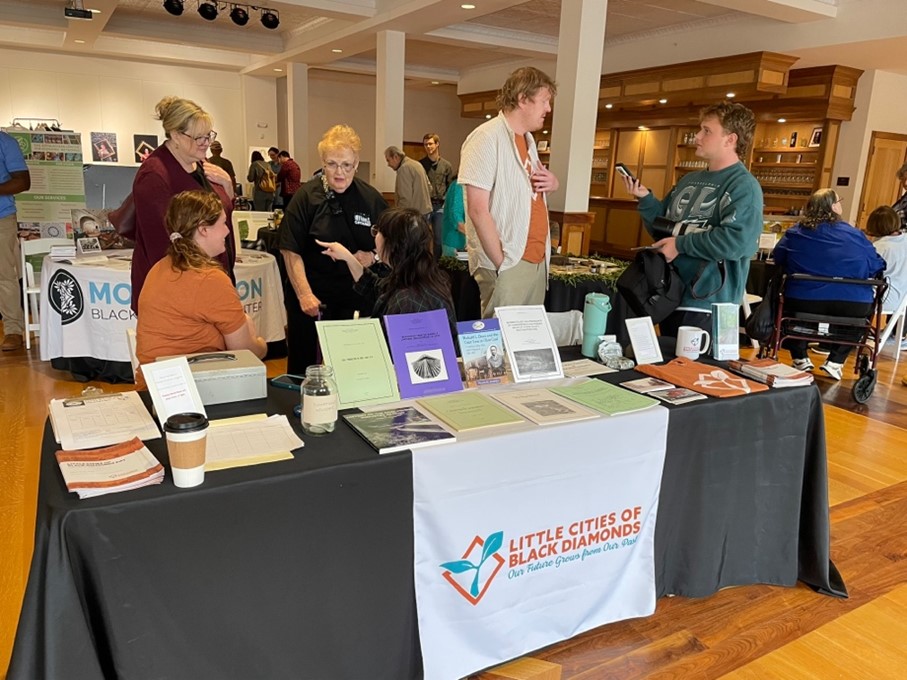
At the same time, our community partners take on the role of educator by collaborating with students through the project. Our students have worked primarily with Little Cities of Black Diamonds and Community Food Initiatives, two organisations local to Southeast Ohio.
Sharing Knowledge
Through these partnerships, we are able to support the exchange of knowledge, heritage, and culture while building community capacity. Our community partners join us in the classroom to teach students about their organisation’s mission and work. Then, students are able to join in on this work and contribute their own skills and expertise to our community partner through projects like presenting short talks on local history at an annual community day, collecting and analysing survey data of community programmes, and interviewing participants to gauge the impact of community programming.
Returning to Wales this past spring and visiting the DOVE Workshop again confirmed why this ongoing exchange between Appalachia and Wales is so meaningful. Our communities face similar but distinct challenges and enjoy a rich culture based on a history of industrial development and post-industrial community response.
At this year’s annual Little Cities of Black Diamonds Day, which took place in Nelsonville, Ohio on 6th September, the speakers talked about history of migration and immigration to the Little Cities region as coal mining developed and boomed in the late 1800s. Many of these immigrants were from Welsh coal mining villages, and they impacted the communities here not only as workers but by establishing families, organisations, and teaching their fellow miners about organised labour back home. My students and I participated in this local history day by surveying participants about the impact of the event, and at our table I displayed many of my souvenir treasures from my visit to Wales in May, which attracted many people and conversations to our table.
The theme of the Little Cities Day this year was “More to Be Told,” focusing on the oral exchange of stories and how new history is being discovered all the time. Surely, there is more to be told, learn, and discover through our Appalachian-Welsh connections.