Even before the pandemic tens of thousands of young people across Wales were facing difficulties in the labour market and in accessing education and training. Covid has deepened these inequalities and made new action from government even more urgent.
Support for those young people most at risk of not being in education, employment or training is co-ordinated through the Youth Engagement and Progression Framework (YEPF), which helps to co-ordinate support for 11–24-year-olds.
The Welsh Government commissioned the Learning and Work Institute and Gower College Swansea to engage with stakeholders and young people to learn more about how the framework is working. The findings from this work have been published and will contribute to the development of a refreshed framework to better support young .
The work was carried out through ten stakeholder consultation events (two with Welsh Government officials and eight with stakeholders working on the framework), as well as engagement with young people through an online survey and more in-depth focus groups.
Feedback from young people
Young people told us how difficult many of them found the school environment. They said that they felt not all learners seemed to be valued and that they felt that priority seemed to be given to those pupils thought most likely to succeed academically. They underlined the importance of support at key transition points and the need for a wider range of options and clear advice and guidance when selecting their GCSEs. They spoke passionately about the importance of positive relationships with individual teachers and support staff and that this support was an essential contributor to their successes and longer-term progression.
Looking to the future of government policy, they also spoke positively about the prospect of a Young Person’s Guarantee. For some, knowing there would have been an opportunity for them to access education, training, work, or help to set up their own business would have given them hope for the future. It showed that young people don’t suffer from a lack of aspiration. They want the same things as their peers: a good job, a decent home, and a proper start in life. However, too many young people simply do not believe these things are available to them. There is a lack of expectation and not aspiration. Breaking that cycle and delivering opportunity for all must be central to a renewed YEPF.
Stakeholder views
Stakeholders rightly focused on the mechanics of the framework and where it could be improved. While we found real challenges facing the system, we also found an incredible level of commitment from professionals and organisations to work together to support young people. However, they also reported that a lack of capacity and practical obstacles to data sharing has made effective collaboration difficult to achieve at times. In particular we found how these barriers to data sharing make transitions for young people that much harder and that the competitive nature of the post-16 system can sometimes work against collaboration.
There was evidence of established and effective systems for identifying young people most at risk of becoming NEET and good examples of where earlier intervention is working well (for example, earlier support to help with the transition to high school). Stakeholders though talked of how support for young people over the age of 19 is harder to coordinate and that overall the YEPF is better developed for the 11-18 cohort.
They identified specific challenges with an increase in the number of young people classified as elective home educated and in the number of young people facing mental health problems.
A major concern for stakeholders is the loss of ESF programmes as a result of new, post-Brexit funding arrangements. While current arrangements are far from perfect, it is concerning that there is likely to be significant shortfalls in future funding that will lead to a loss of support for young people in Wales.
Looking to the future
If the pandemic has exposed the challenges facing our young people, it has also demonstrated the extraordinary level of commitment of the professional and service providers working every day to help them. A refreshed YEPF will need this commitment more than ever if we are to ensure we value all young people and to give everyone the opportunity to fulfil their potential. Perhaps most importantly, the views and lived experiences of young people facing disadvantage need to be placed at the heart of any new framework. Listening to, and engaging directly with, those most impacted by the framework will mean future approaches can deliver the results that our young people need.
David Hagendyk, Director for Wales
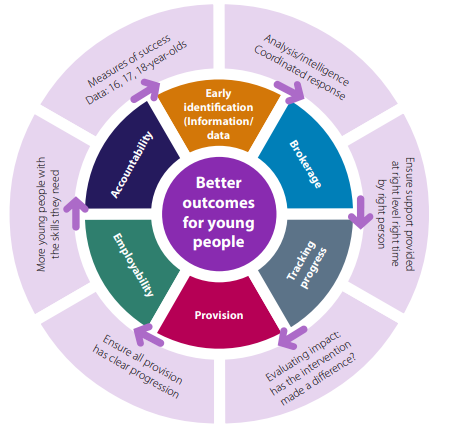
Refresh of the Youth Engagement and Progression Framework
Refresh of the Youth Engagement and Progression Framework
Download