In this guest article from the Edge Foundation, sponsors of the Employment and Skills Convention 2025 breakfast session, Olly Newton outlines reflections from our session panellists on skills shortages in motorsport and related sectors.
As ever, the Employment and Skills Convention 2025 delivered a fantastic selection of discussions and workshops on skills development and employment support. This year, event organisers Learning and Work Institute (L&W) invited Edge to kick things off with a breakfast session – an opportunity we eagerly accepted. Through the lens of motorsport and Formula One, we explored the world of STEM skills shortages. And although rooted in F1, the session revealed lessons relevant to many sectors, from construction to manufacturing, transport and more.
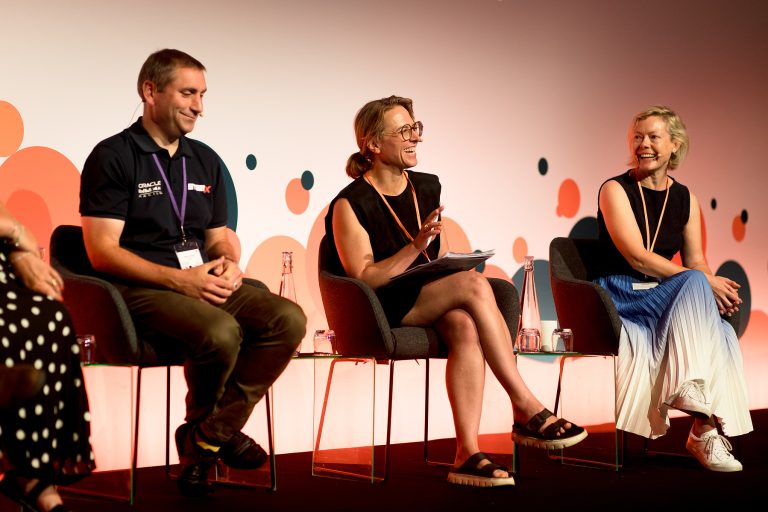
Our panel included four expert contributors with uniquely informed insights into what’s working, where skills gaps lie, and how education and industry could better collaborate. We welcomed Beatrice Barleon (Head of Policy and Public Affairs, EngineeringUK), Owen Carless (Head of Mechanical Simulation, Red Bull Ford Powertrains and Oracle Red Bull Racing) Anna Clarke (Group Director Employer Engagement and Partnerships, Milton Keynes Colleges Group) and Ann Watson (Chief Executive Officer, Enginuity Group).
Non-profit organisation EngineeringUK aims to inspire young people into STEM careers. Head of Policy, Beatrice Barleon, highlighted that motorsport, like other STEM sectors, is shifting – particularly toward electrification, which comes with rising demand for electrical engineers. “By 2030, the UK will need at least 10,000 new electricians each year,” she noted, emphasising that this trend spans beyond motorsport alone, touching energy, construction, and numerous other industries. Her main concern was that the government’s current industrial strategy is too siloed. She said she would like to see a cross-sector STEM Workforce Strategy, a model that, if thoughtfully developed, could be applied to numerous other skills areas.
The blueprint can be lifted and shifted anywhere.
At the heart of motorsport is Red Bull Ford Powertrains, which supports Oracle Red Bull Racing – one of ten current F1 teams. Through partnership with Milton Keynes College, Oracle Red Bull Racing has developed STEMx, a school outreach programme that tackles young people’s awareness gaps around careers in the sportr. As Owen Carless explained: “Many young people would love to work for Red Bull or another Grand Prix team but don’t really understand how or why or what they need to study. Is it all the same level? There’s a bit of mystery around it.” STEMx inspires students early (aged 9 or 10) with the aim of bringing them back later for placements and apprenticeships in the industry. The programme is also diversifying motorsport by reaching students who might not otherwise see themselves in STEM careers.
Anna Clarke from Milton Keynes College Group has been instrumental in the Oracle Red Bull Racing specialist partnership. The College has helped design STEMx activities, including tyre changing tasks and press conference roleplays. While designed to be fun, competitive, and to offer a taste of the industry, they also help learners develop essential team working and communication skills while mapping real-world applications of STEM subjects to the national curriculum – all without increasing the burden to teachers.
Crucially, STEMx is transferable: “The blueprint can be lifted and shifted anywhere,” Anna explained. It’s also accessible: “Alongside working with local home school networks and neurodiverse young people, we’ve focused on schools in deprived areas. These activities are sometimes the first kind of their kind that pupils have experienced.” STEMx is clearly a valuable model for equitable careers education, regardless of sector or skill area.
Finally, Enginuity is a charity dedicated to helping employers in the manufacturing and engineering sectors to close the skills gap. As a former Industry Training Board and Sector Skills Body (previously known as Semta), Enginuity is now a self-funded independent organisation that invests £2 million annually to improve access to skills. As Chief Executive Officer, Ann Watson stressed, however, the UK faces not only a skills gap, but a ‘people gap’. Misconceptions around STEM roles and pandemic-driven job losses – especially in sectors like aerospace, where 11,000 people lost their jobs – have played a key part in this. Ann also pointed to chronic underfunding in Further Education, which limits the viability of many apprenticeships. Her solution? Like Beatrice, a national workforce plan. “A skills plan only solves part of the problem. When building Hinckley Point C, for instance, what do we do with those welders and trained personnel once the nuclear power station is built? Businesses have workforce development plans, so why not the UK?”
Engineering is not a career – it is a whole spectrum of specialisms.
The answer to many of these problems will come as no surprise – it lies with improved collaboration between government and industry, industry and training providers, and even between sectors. Fortunately, the panellists saw some progress being made here. Anna noted that current FE policy creates a collective college voice that can help streamline employer engagement. Meanwhile, Owen suggested employers should increasingly take a whole-industry view. Red Bull’s work with MK College Group, for instance, naturally supports Red Bull’s own talent pipeline. But it also promotes STEM roles more broadly, from high-end manufacturing to advanced materials sciences. Beatrice suggested that simplifying apprenticeship funding – particularly for 16-19-year-olds – could reduce risk for employers and accelerate uptake.
All panellists agreed, though, that Skills England has a critical role to play in shaping a more collaborative culture. “Skills England have a huge amount of convening power,” said Ann. Owen concluded with a salient point too, whether for Skills England, for educators or any sector that belongs to a complex business ecosystem: “Engineering is not a career – it is a whole spectrum of specialisms. It’s important to keep that in perspective.”
All in all, this was a great session to kick off the conference. It offered insights into STEM and motorsport, yes. But with almost every industry currently facing skills disruption, there were valuable lessons here all around. Watch the session in full, or explore these themes further by downloading Edge’s latest Skills Shortage Bulletin, which includes a special F1 supplement.
Catch up on the Employment and Skills Convention 2025
Discover insights from our partners and watch our plenary sessions on demand.
Find out more