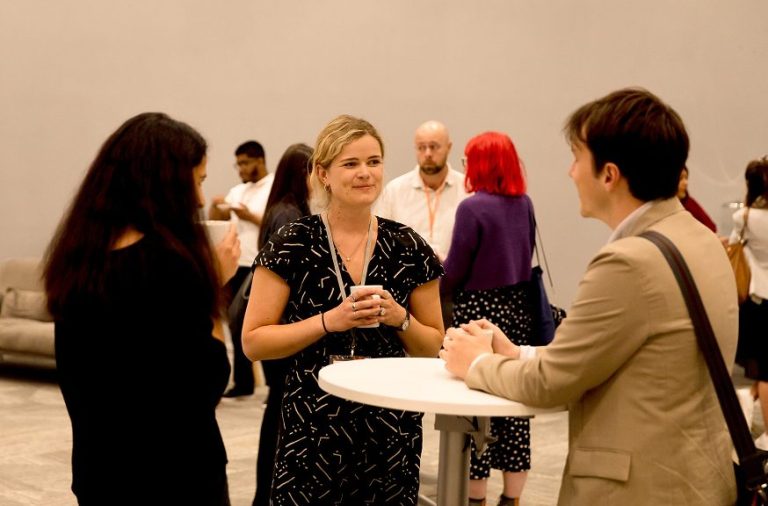
Louise Rowland, the Deputy CEO of Ufi VocTech Trust, explores why we should focus less on skills gaps and more on creating a better skills system.
I’m going to get this out and on the table. We need to change the conversation on skills. We need to change it to one that focuses on the skills system we need rather than addressing whatever skills are currently in shortage. By creating a better skills system, we will address the challenges of the here and now, while creating capacity to adapt and deliver the skills we need for the future.
Let me explain my logic.
The UK skills system is no different from any other ‘supply chain’ to the economy. It is part of the 4th (or are we now in the 5th?) industrial revolution that is underpinning the transition of our economies to ones where change is the new normal. This feature of ‘continuous change’ has profound implications for how the skills we need are developed and delivered.
We can no longer rely on a system that is not geared to adapt, continuously and rapidly, or a system that favours those who have done well in mainstream provision at the expense of those who, arguably, could benefit most and are key to delivering the skills we need.
We need to transition to a world class vocational skills system that is agile, flexible, and responsive. Where vocational skills are valued and celebrated as the engine of a sustainable and equitable UK economy. At Ufi we believe that this can be achieved by a skills system underpinned by digital tools and pedagogies, that delivers employer needs and makes sure no one is left behind.
This is big stuff and it is what Ufi and Learning and Work Institute are working together to explore in our VocTech Challenge: Skills for an economy in transition. Together we share an ambition to shift the dial on adult participation in learning for work and are partnering to show how we can reduce skills imbalances with technology.
I am not going to pretend that there are easy fixes, but having worked in community development, regeneration, economic development and levelling up for all my career, I offer a few observations, which might help us find a way forward.
I wonder whether we are focusing too much on skills gaps and whether this creates an unhelpful shorthand that leads us down a path of initiatives and short-term fixes rather than a truly open discussion about what needs to change to ensure our skills system can deliver.
Take, for example green skills, where by the end of the decade we will we have a shortage of 117,000 skilled people. These are the skills needed to support the industries that will deliver out ambitions for a more sustainable economy (decarbonisation, waste, water, renewable energy etc).
However, I’d argue that critical shortages in the skills needed for a sustainable economy is not a ‘green skills’ problem, it’s a skills system problem. The same logic applies to digital, engineering or any other skills gap.
I don’t believe that we will ever be able to pin down and predict every skill ‘need’, so let’s stop trying.
Too often I hear people call out employers for not being clear enough about ‘skills needs’ and as a result the system cannot provide them. I’m not sure this approach is helpful anymore.
We are all stakeholders in this transition to an economy where change is the new normal. Who knows where the next surprising use of AI will crop up? All we know is that it will, somewhere, and it will catalyse a change. Who knows what global economic shock might change the course of different sectors and industries?
We can study mega trends and create a picture of what might be possible, but we can’t pin down every possibility. But if that is what our skills system requires, to be able to function, then it’s not the system we need.
So, I wonder what would happen if we shifted the discussion away from understanding and defining the ‘gap’ to a bit of design thinking aimed at establishing how our skills system needs to behave to meet the new normal – continuous change?
I’d describe our current approach as a bit like ‘whack-a mole’ and what we need is a systems-based approach to making sure the mole never appears. And if it does, from time to time, we’re in an agile, responsive environment that can take that challenge on, and bake what has been learnt back into the system.
Can a skills system, underpinned by digital tools, be truly inclusive? For the UK to get the skills it needs, now and in the future, we need more people to be doing ‘learning’ more of the time.
We know, from L&W’s Adult Participation in Learning Survey, Ufi’s VocTech Challenge 2021 projects and the RSA/Ufi Rebalancing Adult Learning report that many adults face significant barriers to getting the skills they need to get a job, or progress in work. Too often past experiences with education, confidence, motivation, time, money, access to data and devices are stopping people from engaging in learning.
Is there a risk that we bake ‘disadvantage’ into the system and perpetuate barriers that are already there for learners who are not well served by mainstream provision? If, for example, we just replaced certificates with digital credentials, how would that help open up access and opportunity? While tech could enable this to happen, at Ufi we know that tech can do much, much more to open up access, support learner confidence and create new, engaging ways of getting adults into learning.
It is something we’ve been thinking about and investing in for nearly 10 years, committing over £25m to nearly 300 projects and organisations, all focused on how digital can help ensure that everyone has a chance to develop skills for work.
Since 2016, through our ‘VocTech Challenges’ we have explored the potential of learning tech and digital tools to break down barriers to learning through the lens of manufacturing, upskilling / reskilling and of those learners furthest from learning and most impacted by the digital divide.
The key lesson we’ve learnt about designing inclusive digital products, services and systems is that while it can be challenging, and requires efforts, putting learners at the heart of design is the path to ensuring a new vocational skills system is truly inclusive.
Our work has shown that learning technologies and digital tools have an important role to play in helping to get more people into learning. Our work sheds light on what might be holding learners back and shows how by understanding the needs, motivations and barriers to learning of those furthest from traditional education we can develop digital and blended solutions that can really help ‘level up’ access to skills.
To ensure everyone has the skills they need for an economy in transition, we need to know who our learners are, understand their needs and design a system that works for them.
The VocTech Challenge: Skills for an economy in transition
At Ufi we are committed connecting solutions to problems and bringing people together to share and find new connections, in particular in these constrained times when we all have to find ways to work smarter, foster collaboration and accelerate the pace of change.
As an economy we are taking big steps forward into a sustainable, digital future where skills are key to unlocking UK productivity and competitiveness. At Ufi we want those opportunities to be for everyone, whatever their starting point in their journey into learning and work. Where people aren’t just playing catch-up but have the chance to thrive in new industries and sectors.
Together with Learning and Work Institute our VocTech Challenge will delve deeper into what has already been ‘learnt’ and seek new insights into how we can create a UK skills system, underpinned by tech, that helps to narrow inequalities and ensure every adult can participate in learning throughout their working lives so that the UK, so that no one is left behind as our economy continues to evolve and transition.
I’m excited to see what issues are surfaced. These will shape a grant call and other commissioned activities that Ufi will announce in June. Take a look and have your say.