
Lifelong learning benefits individuals in many ways, including by improving their health, wellbeing, finances and productivity at work. However, many people are still missing out from learning opportunity.
Year after year, Learning and Work’s Adult Participation in Learning Survey has highlighted these inequalities.
The 2024 survey shows adults participation in learning is at its highest since the survey began. However, this has been concentrated among those already in work and stark inequalities between groups and places remain.
To shift the dials on adult participation in learning, local and national government need to set a clear goal to reduce inequalities in access to lifelong learning. Lifelong Learning also needs to be embedded in other policy plans, including health, skills for delivering clean energy and increased homebuilding, and achieving broad-based growth.
Participation in learning has reached a historical high…
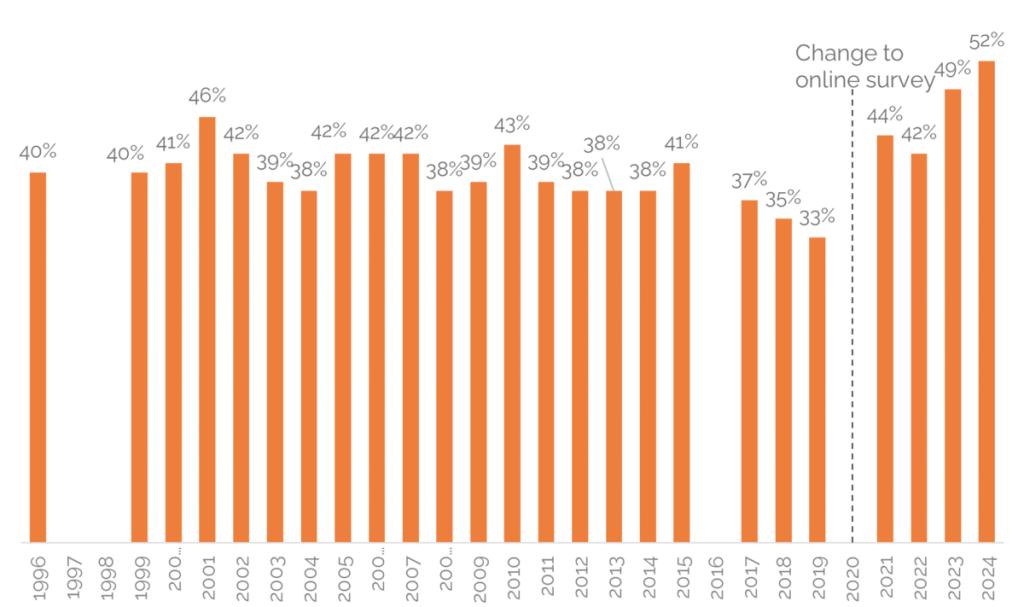
In 2024, 52% of adults say they are either currently learning or they have done so in the last three years.
This is the highest proportion since the survey began and is significantly higher than last year’s figure of 49%. This rise continues the post-pandemic trend of increasing participation levels.
Participation in learning, 1996-2024
Source: Adult Participation in Learning Survey 2024, Learning and Work Institute.
This is mainly explained by the rise in self-directed and online learning. The proportion of adults who report learning independently has nearly tripled since 2012 – from 12% to 34%. Likewise, the proportion of adults who report doing at least some of their learning online has increased significantly since 2019 – from 47% to 63%.
But this increase has been concentrated among those already in work.
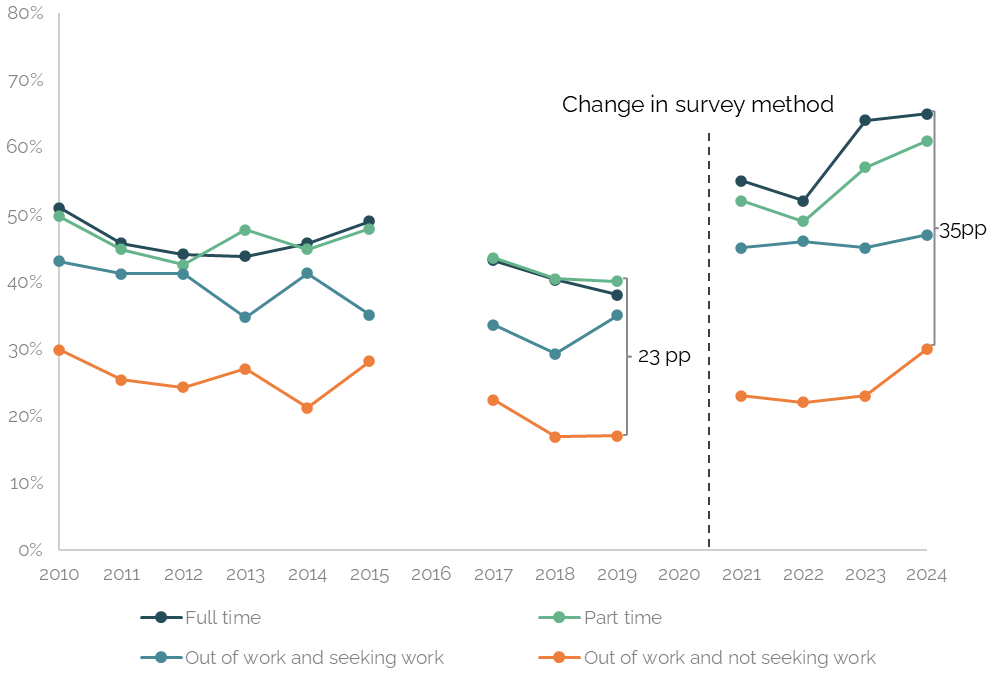
In 2019, 38% of full-time workers reported participating in learning, compared to 65% in 2024. This represents an increase of 27 percentage points. Conversely, participation in learning among people who are not in work and not looking for work levels has increased by only 13 percentage points, from 17% to 30%.
Participation rates by working status, 2010 and 2024
Source: Adult Participation in Learning Survey 2024, Learning and Work Institute.
This makes sense because most people participate in learning for work-related reasons (56%). However, this poses a problem in terms of equality and fairness of access to lifelong learning.
Ensuring that people out of work have access to learning and skills support should be part of the Government’s plan to reach its 80% employment rate target.
There are stark inequalities between sociodemographic groups.
People from the highest social grade are one and a half times more likely to participate in learning than people in the lowest grade. Three fifths (60%) of people in the AB social grade say they’ve taken part in learning in the last three years compared to only two fifths (39%) of people in the DE grade.
Participation levels also differ depending on the age people left full-time education. People who left at 21 or older are twice as likely as those who left at age 16 or younger to report participating in learning in the past three years (62% compared with 34%).
Participation in learning decreases with age, with the likelihood of participation decreasing by 4% for each additional year.
Advances in technology along with longer working lives mean that the way we work and the jobs we do are changing. Government and employers need to widen access to learning opportunities to ensure everyone can adapt to change and thrive at work. Lifelong learning also brings wider benefits such as improved health and wellbeing and social connection, which are important in an ageing society.
Geographical inequalities remain high
The gap between the English regions with the highest and the lowest rates of adult learning participation remains historically wide.
Post pandemic, London has consistently had the highest participation level: this year two-thirds (66%) of Londoners say they have taken part in learning within the past three years. This year the South West has the lowest participation in learning (42%).
The survey doesn’t show any significant differences between UK nations this year. However, the volatility in the data across geographies over time highlights the need for more robust data on adult participation in learning at national and regional levels to inform policy and practice.
Contact
If you’d like to know more about ways you can be involved with our work on lifelong learning, please contact Emily Jones, Deputy Director.
Get in touch